

Thai Massage Explained, What It Feels Like, Benefits, and Safety Tips
Picture this: you’re on a comfortable mat while a therapist uses gentle pressure, slow stretches, and guided movement to help your body feel looser. Instead of just rubbing sore spots, Thai Massage often mixes pressing, pulling, and light twisting in a steady rhythm. Many people say it feels like assisted stretching with calm, focused touch.
This guide is for you if you’re trying Thai Massage for the first time and want to know what to expect, or if you’ve had it before and want a clearer sense of how sessions usually flow. You’ll get a simple, honest look at what happens during a typical appointment, what you might feel in the moment, and how to speak up so the pressure stays comfortable.
Along the way, we’ll cover the benefits many people feel after a session, such as feeling more relaxed, more open through the hips and back, or less stiff from daily sitting. At the same time, this won’t read like a sales pitch or a medical promise; results vary, and it’s normal for your body to respond differently from one day to the next.
You’ll also learn how to choose a therapist, what to mention before you start (old injuries, sensitive joints, pregnancy, or anything that affects comfort), and which safety tips matter most. Finally, we’ll go over aftercare, because what you do in the hours after, like drinking water, taking it easy, and noticing how your body feels, can shape your overall experience.
Thai Massage basics, where it came from, and what happens in a session
Thai Massage is often described as assisted stretching plus steady pressure. Instead of sliding over the skin with oil, the therapist usually works through comfortable clothing, using their body weight to apply controlled compression. The pace tends to be slow and rhythmic, with pauses that let your nervous system settle.
Where did it come from? Traditional Thai Massage (often called Nuad Thai) developed in Thailand over centuries. It carries influences from traditional healing practices and yoga-like movement, especially in how it uses stretches and mindful breathing. You may also hear about “sen” lines, a traditional idea that the body has pathways where therapists apply pressure in patterns. You don’t have to believe in any energy concept to enjoy the session, many people simply experience it as a practical way to ease stiffness and improve mobility.
A typical Thai Massage session also has a different “feel” because of the setup. Many sessions happen on a padded mat on the floor, which gives the therapist room to move your limbs safely and use gentle leverage. Still, some places offer Thai Massage on a table with modifications.
Important: Thai Massage is not meant to be a pain test. Pressure can range from light to strong, but it should still feel safe, controlled, and adjustable.
Thai Massage vs Swedish and deep tissue, what is the real difference?
The easiest way to understand the difference is to picture how the work is delivered.
Swedish massage is the classic “oil massage” many people imagine. The therapist uses lotion or oil and long, gliding strokes to relax the muscles and calm the mind. It usually happens on a massage table, and you mostly stay still while the therapist moves around you. If you want a soothing session after a stressful week, Swedish often fits best. For example, someone who feels “fried” from work, or who is new to touch therapy, may prefer Swedish because it’s gentle and familiar.
Deep tissue massage focuses more on tight layers and stubborn knots. It can include slower strokes, firmer pressure, and detailed work in specific spots. Like Swedish, it’s commonly done on a table, often with oil or lotion. Deep tissue can feel intense, but it still should not feel sharp or alarming. If you lift weights, sit all day with a tight upper back, or get recurring muscle tension in one area, deep tissue might feel more targeted.
Thai Massage is different because it blends compression, stretching, and assisted movement. Many sessions use no oil and are done through clothing, often on a mat. The therapist may guide your arms and legs into stretches, then apply pressure along muscles and around joints. You’re not “working out,” but you might participate by relaxing, breathing, and sometimes helping with a small movement.
Here’s a quick side-by-side view:
| Feature | Thai Massage | Swedish Massage | Deep Tissue Massage |
|---|---|---|---|
| Oil/lotion | Usually no | Usually yes | Often yes |
| Main techniques | Compression, stretching, acupressure, rocking | Long gliding strokes, kneading | Slow, firm strokes, focused work |
| Where it happens | Often on a mat, sometimes a table | Usually on a table | Usually on a table |
| Client movement | Mostly passive, sometimes assisted movement | Passive | Passive |
| Pressure range | Light to strong, should feel safe | Light to medium | Medium to strong, should still feel safe |
The real takeaway: Thai Massage is more “movement-based.” Swedish is more “flow-based.” Deep tissue is more “spot-based.”
Step by step, what you will experience during your first Thai Massage
Your first Thai Massage is usually simple and structured. Most of the comfort comes from clear communication, so a good therapist will check in often, especially early on.
1) Arrival and quick intake
You’ll typically answer a few questions first. Expect basics like where you feel tight, what your daily routine looks like, and whether you have injuries, sensitive joints, or any medical concerns that affect comfort. If you’re unsure what matters, mention it anyway. It helps your therapist choose safer positions and avoid risky stretches.
2) Clothing and setup (mat vs table)
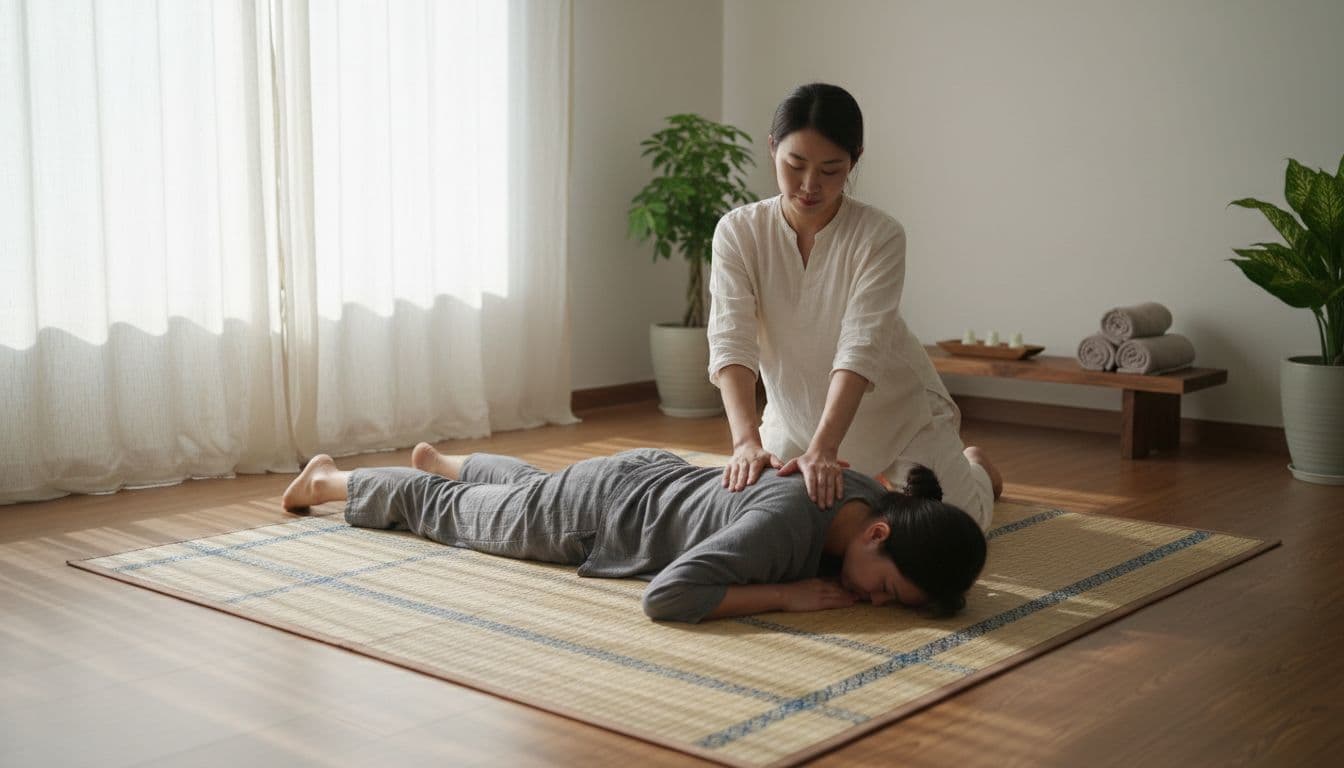
In many Thai Massage sessions, you stay fully clothed in loose, flexible clothing. Some places provide comfy pants and a top, while others ask you to come in athletic wear. Either way, you want clothes that let your hips and shoulders move without pulling.
Then you’ll get positioned on a padded mat on the floor (or sometimes on a table). A mat gives more room for the therapist to move around you and support your limbs.
3) Comfort level and pressure checks
Before anything intense happens, the therapist usually starts with gentle pressure to “read” your body. They might ask, “How’s the pressure?” early and often. Answer honestly. A useful scale is: light, medium, strong, or “too much.” Strong can feel great, but it should never feel unsafe.
4) The flow: pressure, rocking, then stretches
Thai Massage often begins with compression along the feet, legs, and hips, then moves upward. The therapist may use:
- Hands and thumbs for controlled pressure in smaller areas
- Forearms for broader, steady compression that feels grounded
- Elbows for precise work (used carefully, not jammed in)
- Gentle rocking to relax the body before deeper work
Stretching usually comes in stages, not all at once. The therapist might bend your knee, circle your hip, or guide your arm overhead, then hold a stretch while you breathe.
5) You can pause, change, or skip at any time
This part matters. You can always say:
- “Less pressure, please.”
- “Can we skip that stretch?”
- “My knee doesn’t like that angle.”
- “Stop for a second.”
A professional therapist will adjust right away. Your job is not to “push through.” Your job is to stay present and give clear feedback.
Consent is part of the technique. You can say yes, no, or not today, and a good Thai Massage still works around your needs.
Understanding stretching, compression, and acupressure in plain language
Thai Massage can sound mysterious until you break it down. The main techniques are very human and practical, they’re things your body already understands.
Stretching (assisted)
Think of it like when a friend helps you stretch your shoulder by gently moving your arm, only with much more care and skill. In Thai Massage, stretching is usually assisted, meaning the therapist supports your limb, moves slowly, and stops at your edge. You should feel opening and relief, not a sharp “uh-oh” sensation.
A helpful cue is to breathe out as the stretch deepens. Exhaling tells your body, “It’s okay to soften.”
Compression (steady pressure)
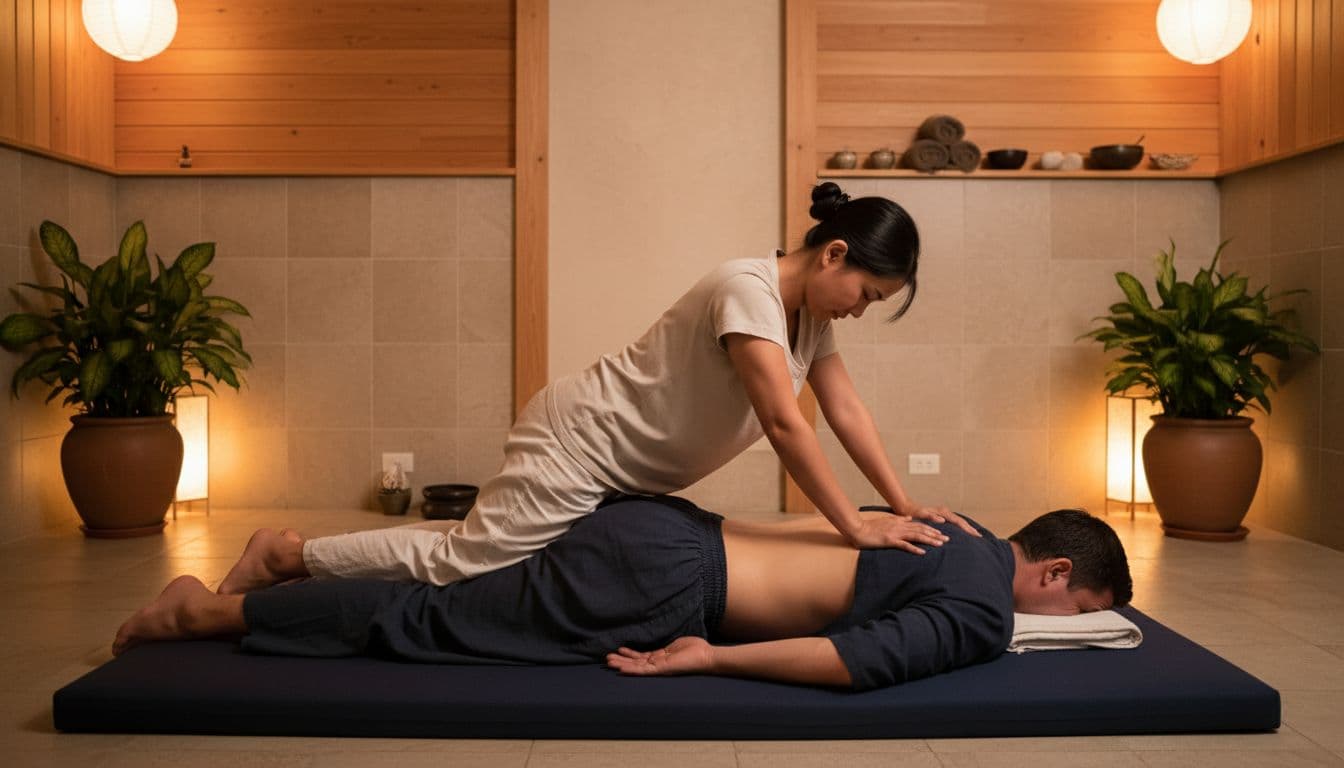
Compression is like pressing a sponge slowly and evenly, not poking it. The therapist leans in with body weight, then eases off, often in a calm rhythm. This can feel deeply relaxing because it’s direct without being scratchy or fast. Many people love compression on the hips, glutes, and back because it feels stable and supportive.
Acupressure (focused points)
Acupressure is more like pressing and holding a specific “button” that feels tender or tight. The therapist applies focused pressure with a thumb, palm, or elbow, then holds for a few seconds while you breathe. It’s normal to feel a “good ache” that fades as the area releases. If the sensation turns sharp, electric, or makes you hold your breath, that’s your stop signal.
A quick note on soreness and safety
Mild soreness can happen later, similar to how you feel after a deep stretch. That’s more likely if you went strong on pressure or tried bigger stretches than usual. However, sharp pain is not normal. Numbness, tingling, or a pinching feeling also deserves an immediate adjustment. When in doubt, speak up sooner rather than later.
Benefits people look for, and how Thai Massage can support daily life
Most people don’t book Thai Massage just for a “treat.” They book because daily life leaves a mark, tight hips from sitting, a stiff back from driving, shoulders creeping up from stress, or feet that feel tired by mid-afternoon. Thai Massage can help you feel more open and more settled, because it mixes steady compression with assisted stretching and slow pacing.
The biggest win is often how practical it feels afterward. You stand up and notice simple things, turning your head feels easier, your stride feels longer, or your posture feels less forced. Still, keep it real: Thai Massage isn’t a cure-all, and your results can change based on sleep, stress, training, and even how much water you’ve had that day.
Mobility and flexibility, why stretching feels so good afterward
Think of range of motion as how freely a joint can move without strain. If your hips feel “stuck,” your range is limited. If your shoulders won’t reach overhead without pulling, that’s range too. Thai Massage often helps because it doesn’t only press muscles, it also guides your body through safe, supported movement.
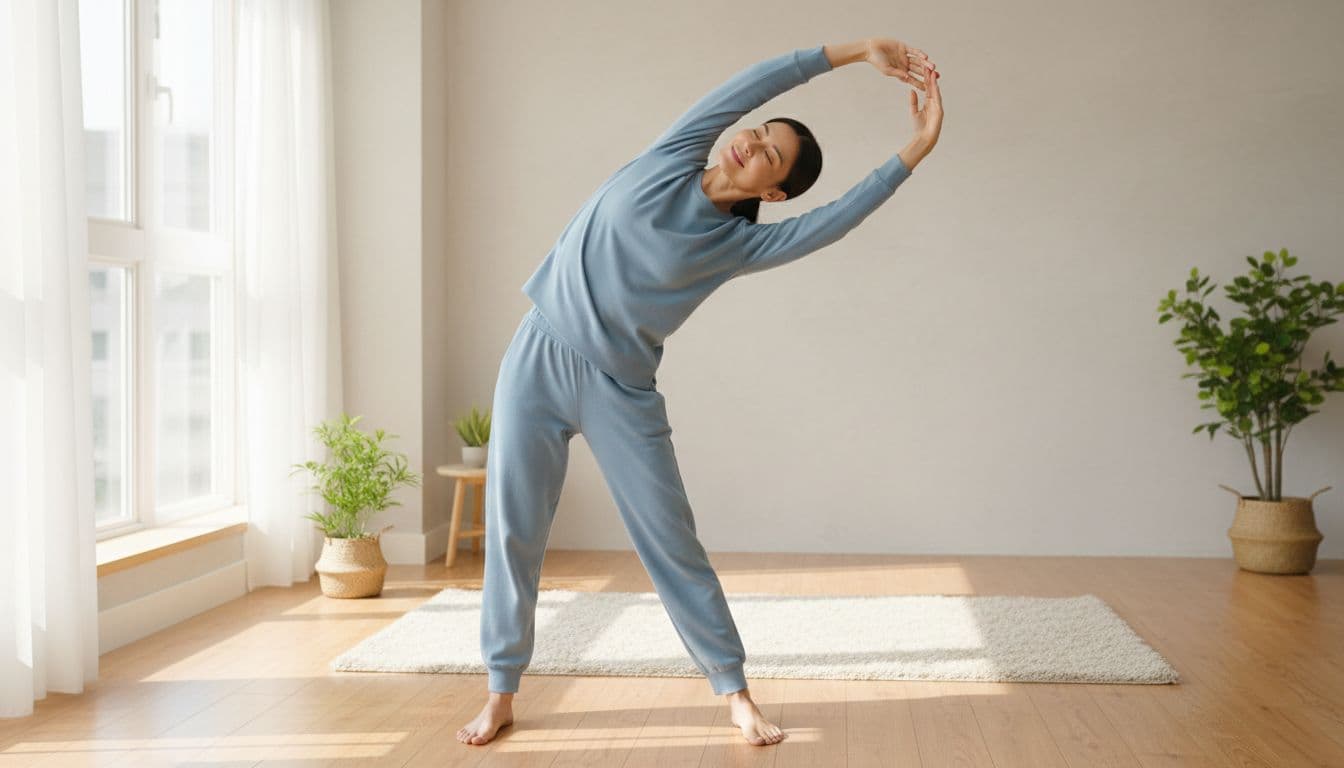
A lot of tightness comes from “protective holding.” Your body braces when you sit all day, carry kids, lift weights, or hunch over a laptop. Over time, those patterns shorten tissues and limit comfortable movement. With Thai Massage, the therapist uses gentle assisted stretches and steady pressure, so your muscles can soften while your joints move through a wider, more natural arc.
These are the areas many people notice first:
- Hips: Sitting can make hip flexors feel shortened, which can tug on the low back. Assisted hip opening often feels like your pelvis finally has room.
- Hamstrings: Tight hamstrings can make bending feel like pulling on a tight rope. Slow leg stretches can bring back ease.
- Back: Compression and supported twists can reduce that “board-like” feeling, especially after long drives.
- Shoulders: Phone and desk posture often locks shoulders forward. Gentle chest and shoulder opening can help your upper body feel more upright.
Why does stretching feel so good afterward? Because the body likes options. When your joints move more freely, everyday tasks cost less effort. Walking feels smoother. Reaching for a shelf feels normal again. Even your breathing can feel less restricted when the ribs and upper back loosen.
To stay loose between sessions, keep it simple and consistent. You don’t need a long routine, you need a repeatable one.
A realistic “between sessions” plan:
- A short daily stretch routine (5 minutes): Hip flexor stretch, hamstring stretch, and a gentle chest opener. Hold each for a few slow breaths.
- Walking most days: A brisk 10 to 20 minutes keeps hips and ankles moving and reduces stiffness from sitting.
- Hydration and steady meals: Dehydration can make you feel more tight and fatigued. Water plus regular meals supports recovery, especially if you train.
A good Thai Massage session can create space in your body. Your habits decide how long you keep it.
Stress relief and body awareness, the calm feeling many people notice
Stress doesn’t only live in your thoughts. It shows up as tight jaws, shallow breathing, clenched hands, and shoulders that never fully drop. Thai Massage can help because the pace tends to be slow, the pressure is steady, and the work often includes gentle rocking and supported holds. That combination gives your nervous system a clear message: you’re safe, you can soften.
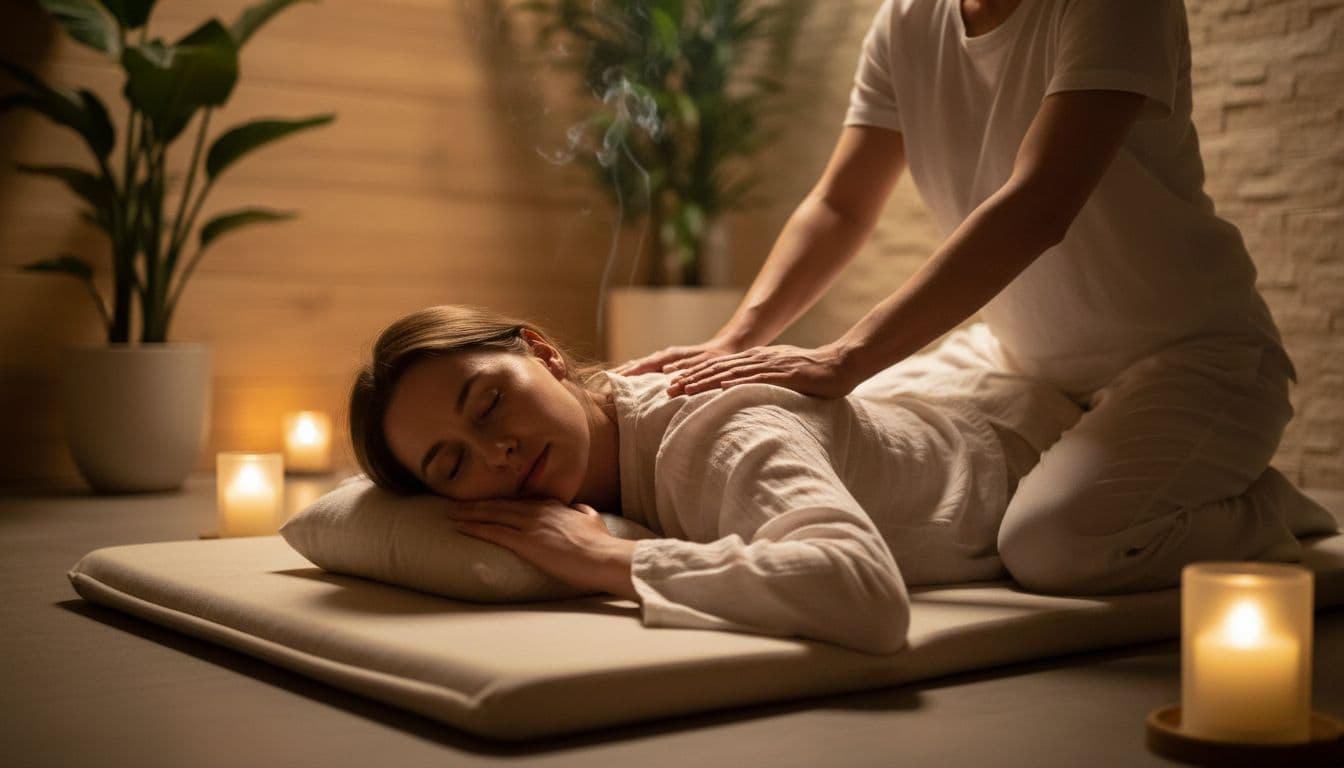
Breathing matters here. When you inhale slowly and exhale fully, your body shifts toward a calmer state. Many therapists also naturally guide your breath without “coaching” it, simply by moving in a steady rhythm. As a result, you may notice:
- Your mind stops racing for a while.
- Your body feels heavier in a good way, like it can finally rest.
- You become more aware of where you hold tension, without judging it.
Sometimes people feel emotional release during Thai Massage. Tears can come up, or you might feel unexpectedly quiet afterward. That’s normal for some clients. The body stores stress as tension, and letting go can feel emotional even when nothing “bad” happens in the session. If it happens to you, it doesn’t mean something is wrong.
Simple grounding tips during the session help a lot, especially if you tend to overthink:
- Take slow breaths you can repeat: In through the nose, out through the mouth, and let the exhale be a bit longer.
- Name what you feel, without drama: “That’s intense,” “That’s too much,” or “Can you stay there a little longer?” keeps the session safe and effective.
- Speak up early: If you wait until you’re bracing, your body will fight the work. Ask for less pressure or a smaller stretch right away.
This calm feeling can also support sleep quality for some people, mainly because they feel less wired at night. Even if sleep doesn’t change immediately, many clients still like the “reset” effect, especially during busy work seasons or family-heavy weeks.
Common problem areas, neck and shoulders, lower back, hips, and feet
Most tight spots come from two things: repetition and stillness. Phones, desks, long commutes, and standing all day teach the body to lock into the same positions. Thai Massage helps by combining compression (steady pressure), assisted stretching, and gentle twists that restore movement without rushing.
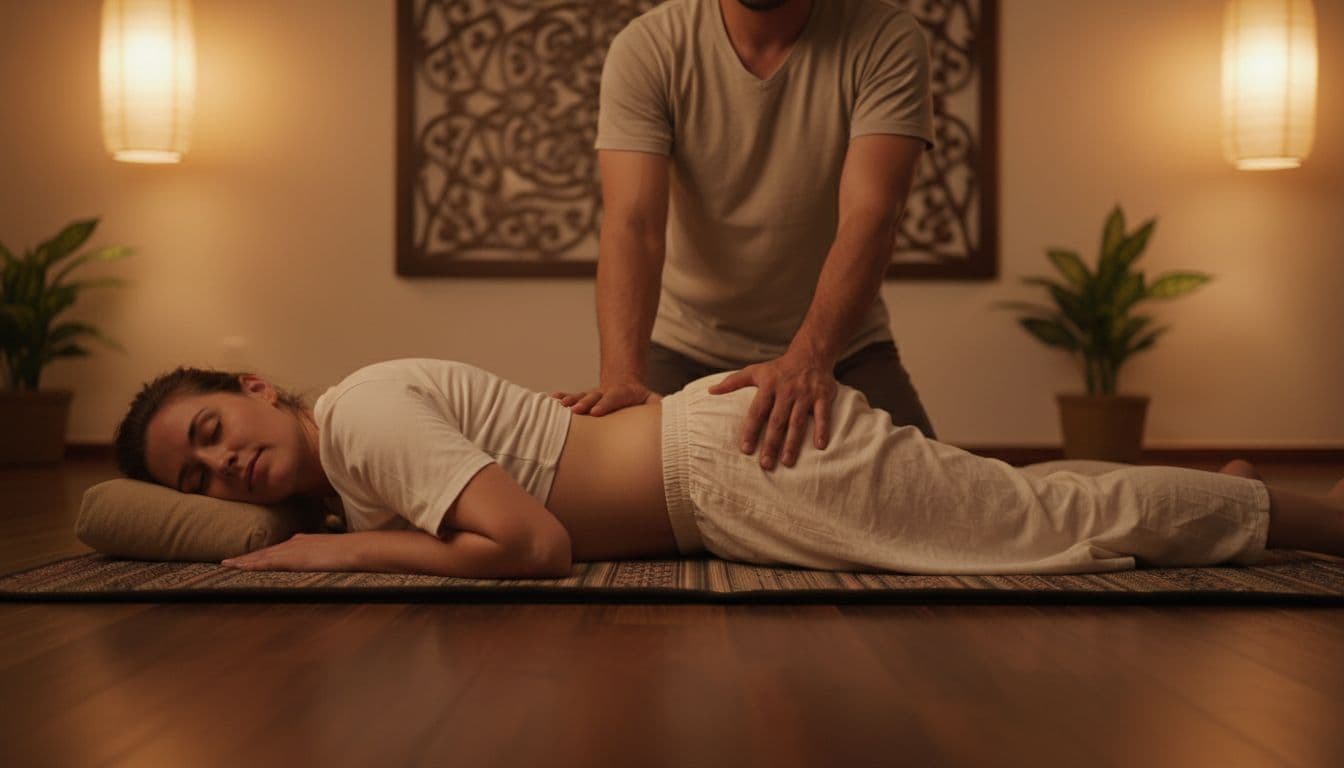
Neck and shoulders (phones, laptops, and “stress posture”)
When you look down at a phone, the neck and upper back do extra work. Add stress and you may hold your shoulders up like you’re wearing invisible earmuffs. Thai Massage often targets this area with:
- Palm compression along the upper back and shoulder blades
- Thumb pressure in smaller tight points (used carefully)
- Gentle shoulder and neck stretches that feel like space returns around the collarbones
If anything feels sharp, pinchy, or “electric,” say so right away. A good therapist will adjust the angle or reduce pressure.
Lower back (sitting, driving, and guarding)
Low backs often feel tight because the hips do less work when you sit a lot. Then the back tries to “help,” and it ends up tired. Thai Massage commonly addresses this with:
- Broad compression through the glutes and side hips (often where the real tightness hides)
- Supported twists that feel like wringing out a towel, gently
- Hip stretches that reduce pulling through the lumbar area
If a twist doesn’t feel right, skip it. Strong twisting is never required for a good session.
Hips (desk life, training, and busy-parent lifting)
Hips get stiff from sitting, but also from training, running, or carrying kids on one side. Many people love Thai Massage for hips because it uses slow, assisted movement that you can’t do alone as easily. Common techniques include:
- Hip opening stretches done gradually with breath
- Compression along the outer hip and glutes to reduce that deep, stubborn tension
- Gentle leg traction (a careful pull) that can feel like your hip joint gets room
The key is staying relaxed. If you feel yourself holding your breath, you’ve gone too far.
Feet (standing all day, hard floors, and tight calves)
Feet take the hit whether you’re on your feet all day or sitting in shoes that limit movement. Thai Massage often includes:
- Thumb and palm compression on the soles
- Ankle mobility work with slow circles and stretches
- Calf compression and stretching, since tight calves often pull on the feet
Many people feel more energized after foot work, because walking simply feels better. Still, foot work can be tender, especially if you stand a lot. Ask for a lighter touch if needed.
Thai Massage should feel like “good pressure” plus safe stretching. If your body says no, listen.
How often should you get Thai Massage? Simple schedules for real life
The best schedule is the one you’ll actually keep. Some people want mobility support for desk stiffness. Others book for stress relief, sleep, or recovery from training. Budget matters too, so it helps to think in seasons. You might go more often during a heavy period, then taper to maintenance.
Here are realistic options you can copy:
- Maintenance (once a month): Great if you feel generally okay but want to stay loose, especially with desk work or light workouts.
- Stress-heavy periods (every 2 weeks): Helpful during tough work deadlines, family stress, or poor sleep weeks, when your shoulders and jaw keep tightening.
- Active training (weekly or as needed): Works well for athletes, runners, and gym-goers who feel consistent tightness in hips, hamstrings, and upper back. Adjust based on soreness and training load.
- Recovery after travel (one session within a few days of arrival): Long flights and car rides shorten hips and stiffen the back. A session can help you reset, then a follow-up in 2 to 3 weeks can maintain the change.
No matter the schedule, pay attention to how you feel 24 to 48 hours later. If you feel looser, calmer, and you move better, you’re on track. If you feel wiped out or extra sore, scale back intensity or spacing.
Also, don’t outsource your whole wellness plan to the massage mat. Thai Massage works best alongside basics you control:
- Sleep you protect (even an extra 30 minutes helps)
- Daily movement (walking and light stretching count)
- Simple recovery habits (water, regular meals, and lighter activity after a strong session)
How to choose the right Thai Massage session, and stay safe and comfortable
A great Thai Massage session feels like a skilled guide helping your body find more space, not a stranger pushing you past your limit. Your best results usually come from three choices: who you book with, how long you book for, and how clearly you communicate.
Before you even get on the mat, decide what you want most today. Do you want more hip mobility, less low back tension, or a calmer nervous system? That one goal helps you choose the right session length and pressure, and it helps your therapist plan a safer flow.
Finding a skilled therapist, what to look for and what questions to ask
Technique matters in Thai Massage because leverage and angles matter. A skilled therapist uses body weight and positioning, not brute force. You should feel steady pressure and controlled stretching, with lots of room to adjust.
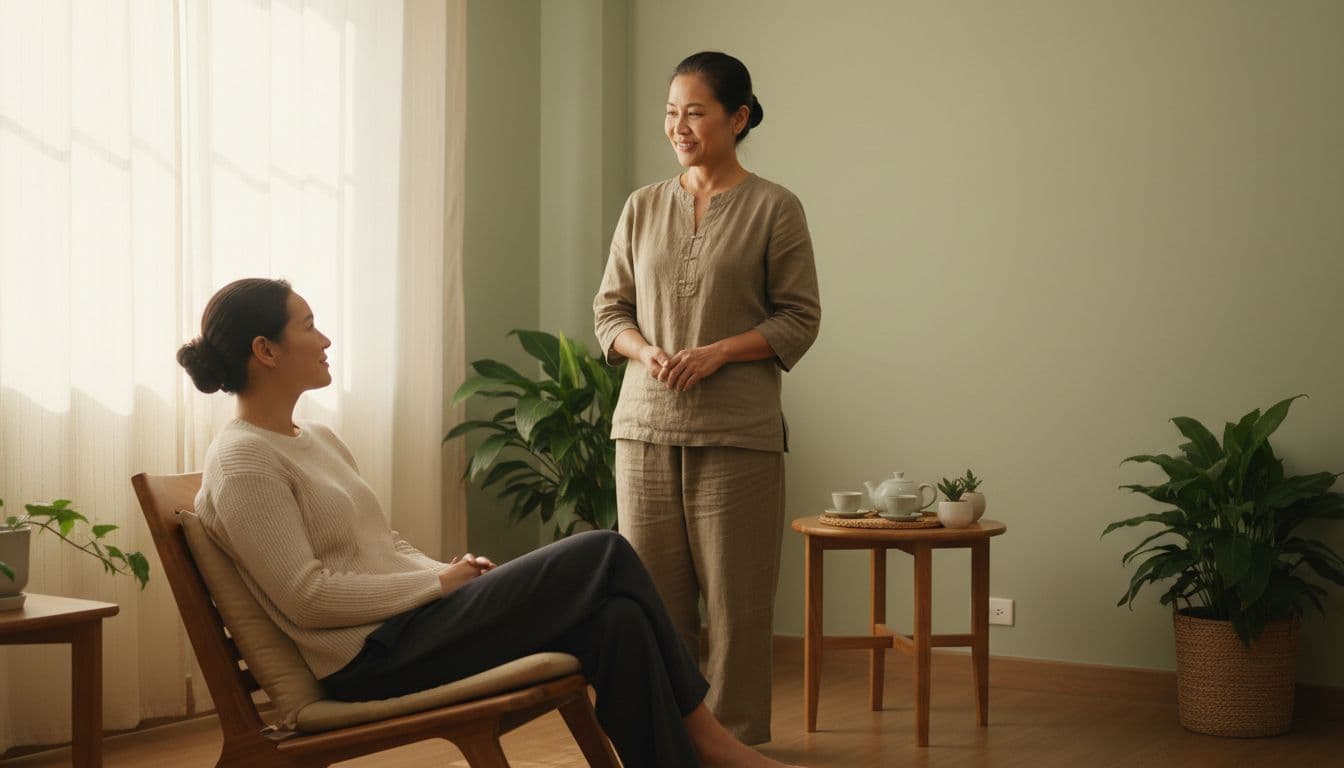
Start with basic signals of professionalism. Notice how the spa handles communication. Pay attention to whether the therapist listens closely, explains what they’re doing, and checks in without you having to beg for it. If you feel rushed in the first two minutes, the session may feel rushed too.
Here’s a short, practical checklist you can use when choosing a therapist:
- Training hours: Ask where they trained and how long their Thai Massage training was. More hours usually means better control and safer technique.
- Specialization: Look for experience with what you need (tight hips, athletes, gentle work, prenatal).
- Hygiene: Clean room, clean linens, clean hands, and a tidy setup.
- Clear intake: They ask about injuries, surgeries, pregnancy, and comfort with stretching.
- Pressure checks: They check pressure early and often, then adjust fast.
- Professional boundaries: Consent, clear draping expectations, and a respectful tone throughout.
A good therapist welcomes questions because it helps them do better work. Use simple, direct questions like these (and borrow the exact wording if you want):
- “Can we focus on hips today?”
- “Can we keep pressure light to medium?”
- “Can we avoid neck stretches?”
- “Do you do Thai Massage on a mat, a table, or both?”
- “If something feels too intense, what’s the best way to tell you?”
Also, trust your gut. Comfort and safety are not “nice extras,” they are the foundation. If anything feels off, you can end the session. You don’t owe anyone a full hour of your time when your body says no.
A helpful rule: If you can’t relax with the therapist, your muscles won’t either.
Choosing the right session length (60, 90, or 120 minutes)
Session length changes the whole feel of Thai Massage. Longer does not always mean better. It just gives more time for a slower pace, more areas, and more rest between stretches.
A quick guide:
- 60 minutes: Best for one main focus (hips, back, shoulders) or a first session where you want to keep it simple.
- 90 minutes: The sweet spot for many people. You can cover full body without rushing, and still keep the pressure moderate.
- 120 minutes: Great when you want full body plus extra time on problem areas. It also works well if you prefer a slower pace and lots of breath room.
If you tend to get sore easily, start with 60 to 90 minutes and keep intensity moderate. You can always go longer later.
Picking a pressure level that helps, not hurts
Some people think Thai Massage must be strong to “work.” That idea causes most bad experiences. Strong pressure can feel amazing, but only when your body agrees.
Try this simple pressure scale during check-ins:
- Light: Calming, great for stress and tenderness.
- Medium: Deep relief without bracing, often ideal for most areas.
- Strong: Intense but controlled, you can still breathe slowly.
- Too much: You tense up, hold your breath, or feel sharpness.
If you notice your shoulders creeping up or your jaw clenching, treat it like a dashboard warning light. Ask for less pressure, or a smaller stretch, right away.
What to wear, how to prepare, and what to tell your therapist
Thai Massage is easier when you show up prepared. Think of it like a good road trip: the smoother the start, the better the whole ride feels.
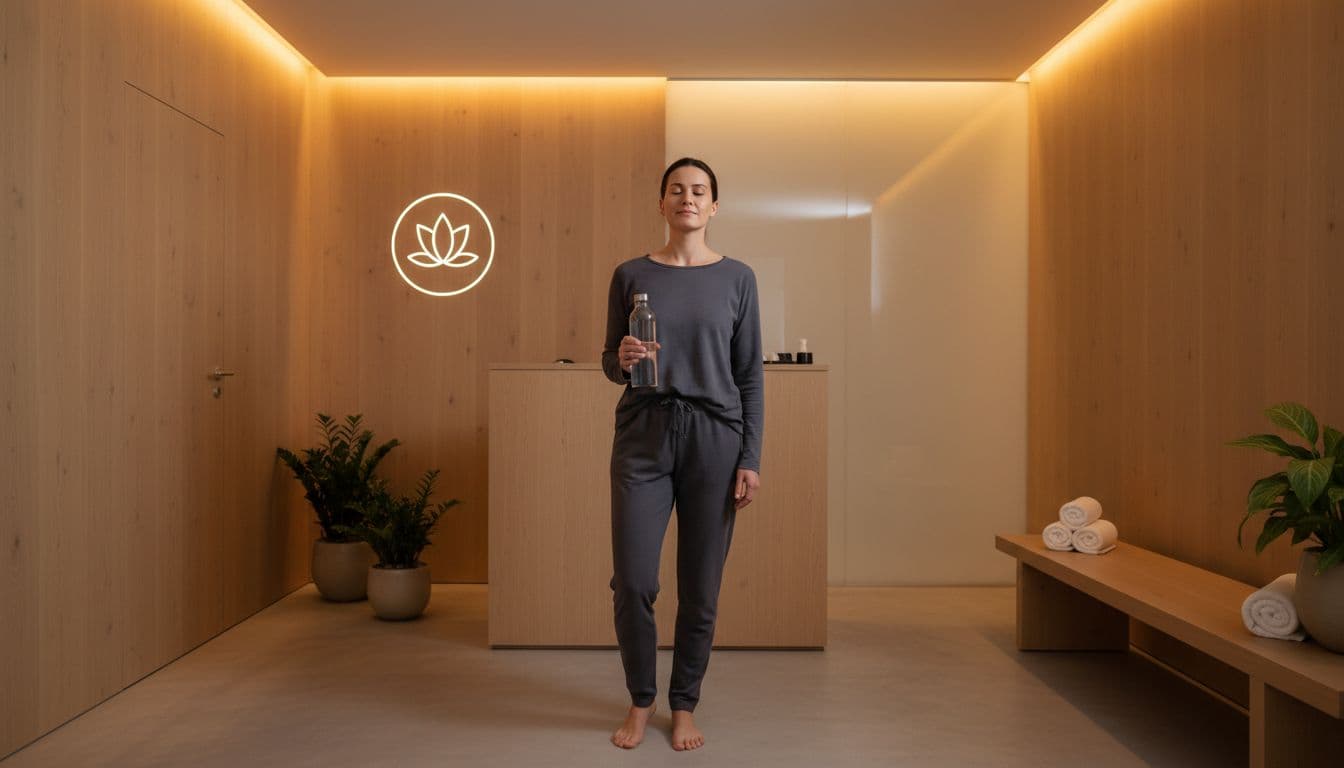
What to wear (and what not to wear)
Most Thai Massage sessions are done fully clothed. Your clothing should support movement without getting in the way.
Aim for:
- Stretchy, breathable fabric (like yoga or gym wear).
- A fitted but comfortable top, so it doesn’t ride up during stretches.
- Pants that stretch at the hips and knees, since legs move a lot.
- No bulky zippers or hard buttons, which can press into you on the mat.
Avoid extremely loose clothes that twist around your body. They can pull during stretches and become distracting. Also skip heavy perfume or strong scented lotions, because scent gets intense in a small room.
Modesty and draping norms vary by spa. Some provide Thai-style pants and a top. Others ask you to come dressed. If you’re unsure, call ahead and ask what’s typical there.
How to prepare the day of your session
Small choices before Thai Massage can change how your body responds. A few simple habits help you feel comfortable and steady.
Plan for:
- Arrive 10 to 15 minutes early, so you can settle and fill out intake forms calmly.
- Avoid a heavy meal right before. A full stomach and deep hip work don’t mix well. If you need something, go light.
- Hydrate, but don’t chug water in the parking lot. Sip steadily.
- Use the restroom beforehand, because the session involves pressure and movement.
If you’re coming from a hard workout, mention it. Your muscles may be more sensitive. In that case, lighter pressure often feels better than deep work.
What to tell your therapist (even if it seems minor)
Your therapist can only work with what they know. Share the basics, even if you think it’s “not a big deal.” Many safety issues come from missing info, not bad intent.
Bring up:
- Injuries and old pain patterns (ankles, knees, low back, neck).
- Pregnancy, even early pregnancy, and postpartum recovery.
- Surgeries (recent or major), plus any areas that still feel guarded.
- Blood pressure issues, especially if it’s uncontrolled.
- History of blood clots, stroke, or serious vascular issues.
- Medications that affect bruising or bleeding (for example, blood thinners).
- Your comfort with stretching (do you want gentle mobility work or mostly compression?).
- Areas you don’t want touched, no explanation needed.
If you’re not sure how to describe it, simple language works: “My right hip feels tight when I walk,” or “My neck gets cranky if it turns far.”
A useful tip: tell them what “better” would feel like. For example, “I want to sit without low back tightness,” or “I want my shoulders to drop.”
Safety first, who should be careful, and when to skip Thai Massage
Thai Massage should never feel like a dare. The goal is relief and mobility, not pain. Certain situations call for extra caution, and a few call for skipping until you get medical guidance.
Here are common cases where you should be careful, modify heavily, or avoid Thai Massage:
- Recent injury (sprain, strain, or flare-up that is still hot or swollen)
- Fractures or suspected fractures
- Severe osteoporosis or very fragile bones
- Uncontrolled high blood pressure
- History of blood clots, or current clot risk concerns
- Recent surgery (especially in the last few weeks or if healing is complicated)
- Pregnancy (book only with a trained prenatal therapist, and ask for prenatal-safe positioning)
- Severe, unexplained pain, especially if it’s new or getting worse
- Fever, flu-like symptoms, or feeling unwell
- Skin infections, rashes, or open wounds in the areas being worked on
If you’re unsure, check with a clinician first. That’s not being dramatic, it’s being smart. A quick call can prevent weeks of irritation.
Also, watch for nerve-like sensations during the session. Tingling, numbness, “zaps,” or burning feelings are signs to stop and adjust. Thai Massage includes stretching and joint movement, so the therapist needs to change angles quickly if anything feels wrong.
Remember: A “good hurt” is optional. Sharp pain is a stop sign, not a milestone.
Extra caution for neck work and big stretches
Neck stretches can feel great, but they require care. If you have a history of neck issues, headaches triggered by neck movement, or dizziness, ask the therapist to keep it gentle or skip it. The same goes for deep backbends, strong twists, and aggressive hamstring stretches. You can get excellent results without any of those.
If your therapist seems annoyed by your limits, that’s useful information. Your body deserves a calmer room than that.
Aftercare that helps the results last, what to do the same day and the next day
Thai Massage can leave you feeling floaty, open, or surprisingly energized. It can also leave you mildly sore, like you did a deep stretch session. Aftercare helps your body lock in the good changes without feeling wiped out.
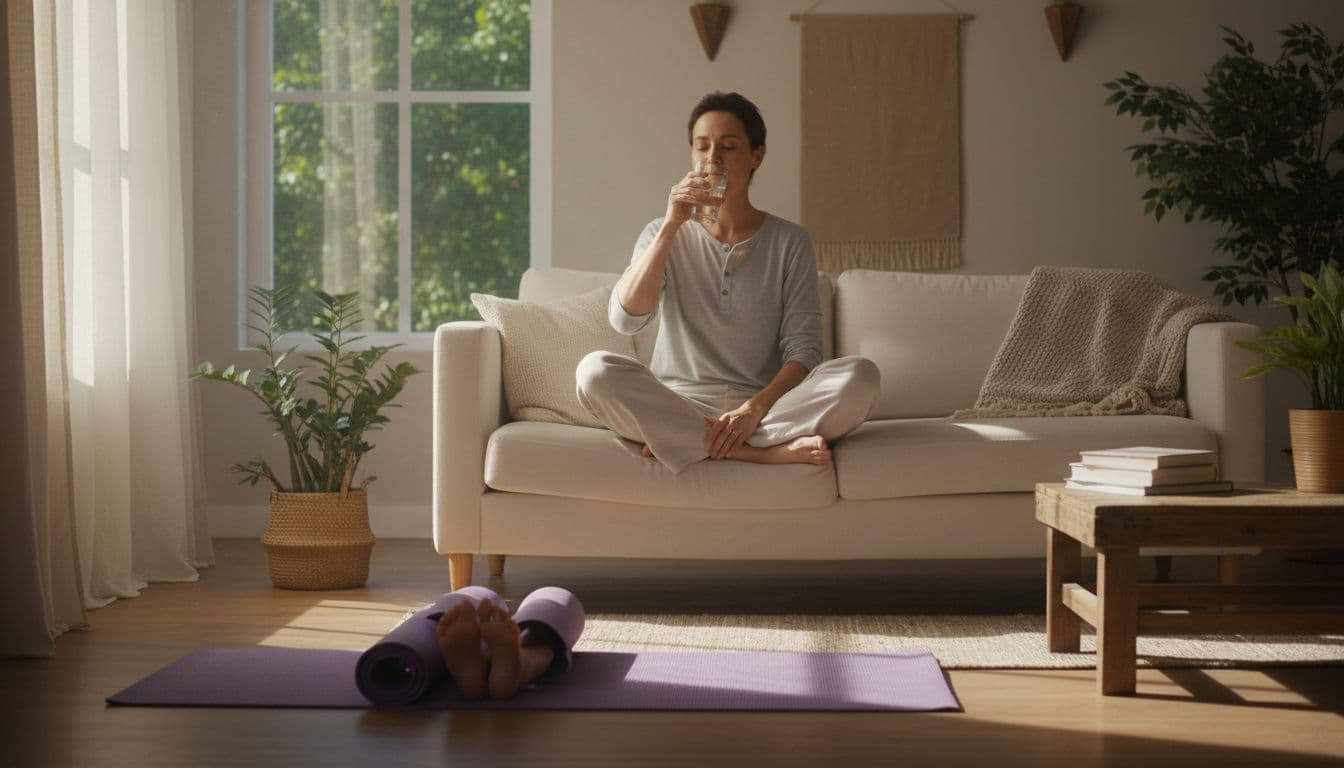
The same day: keep it easy and let your body settle
Right after your session, your nervous system is still shifting gears. So, think “support,” not “push.”
Simple same-day aftercare:
- Drink water over the next few hours.
- Take a warm shower if you feel stiff, especially after deeper compression.
- Do light movement, like a short walk, so you don’t lock up from sitting.
- Eat a normal, balanced meal, because recovery needs fuel.
- Skip intense workouts if you feel sore or loose in a new way.
If you train hard, you don’t have to cancel your whole routine. Still, treat the day like you adjusted your alignment. A lighter session often feels better than max effort.
The next day: read your body and adjust your plan
The day after Thai Massage is when you learn what worked. Some people wake up looser. Others feel tender in specific spots.
Common normal responses include:
- Feeling sleepy or extra calm
- Feeling energized and lighter on your feet
- Mild soreness, especially in hips, glutes, or along the back
- A sense of “new space” that makes posture feel different
Those are usually fine. However, watch for red flags that need attention:
- Sharp pain that doesn’t fade
- Numbness or tingling
- Dizziness that feels unusual
- Pain that gets worse quickly, instead of settling down
If any red flag shows up, contact a clinician. Also tell your therapist before your next session, because it guides safer choices.
Keep a quick “body note” for your next session
You don’t need a journal habit. A 30-second note on your phone is enough. Write what you felt right after, and what you felt the next day.
Use prompts like:
- “Best change: __.”
- “Too intense: __.”
- “Next time I want more: __.”
- “Next time avoid: __.”
That small note turns your next Thai Massage into a more personal, more comfortable session. Over time, you’ll learn your best mix of pressure, stretching, and pace, and your body will start to trust the work faster.
Conclusion
Thai Massage blends steady compression, gentle rocking, and assisted stretching, usually through comfortable clothing on a mat. As a result, it often feels less like an oil massage and more like guided movement, with pressure that can range from soothing to satisfyingly strong, without crossing into sharp pain.
Most people book Thai Massage because they want practical changes, easier hips, a looser back, softer shoulders, and a calmer nervous system. Over time, those benefits can show up in simple ways, better posture, freer breathing, and less stiffness from sitting, training, or long commutes. Still, the best sessions stay grounded in comfort, because relaxing your guard is what lets your body respond.
A good experience starts with choosing a skilled therapist who checks in, explains, and respects limits. Then, keep the plan simple: decide your main goal, pick a session length that matches it, and speak up early about pressure, sore spots, and any injuries or health concerns.
Next time you book, choose one focus (like hips or shoulders), ask for your preferred pressure level, and give your body an easy day afterward. Drink water, take a short walk, and notice how you feel 24 hours later, that feedback makes your next Thai Massage even better.