
Hot Stone Massage: What It Feels Like, Benefits, Safety, and What to Expect
Tight shoulders after a long day, a busy mind at bedtime, or that low-level stress that won’t quit, it adds up fast. When your body feels stuck in “on” mode, Hot Stone Massage can help you soften the tension without forcing it.
This heat-based massage style uses smooth, warmed stones placed on key areas (often the back, neck, hands, or legs) while your therapist also massages with hands and, at times, the stones. Because the warmth loosens muscles quickly, many people find the pressure feels deeper, yet more comfortable.
Stones are usually heated to a safe range of about 120 to 150°F (49 to 65°C). You should always be able to ask for less heat, lighter pressure, or both, so the session stays soothing, not intense.
In this post, you’ll learn what hot stone massage feels like, how a session typically works, and the real benefits people notice most (like easier movement, less stress, and better sleep). You’ll also get clear safety tips, who should avoid it, how to choose a therapist who takes hygiene and temperature seriously, and simple ways to get the most from your appointment.
What a Hot Stone Massage really is, and why heat changes how your body feels
A Hot Stone Massage is a hands-on massage that uses smooth, heated stones in two main ways. First, your therapist places the stones on key areas (often your back, shoulders, palms, calves, or between your toes) so heat can soak in while you rest. Next, they may also hold stones and glide them along your muscles, using them like warm extensions of their hands.
The big difference is simple: heat changes how your nervous system and muscles respond to touch. Warmth signals “safe” to the body, so tight areas often soften sooner. As a result, you can get a deep sense of relief without your therapist needing to push hard or chase knots aggressively.
Hot stones vs regular massage, what feels different on the table
With a regular massage, the first few minutes can feel like your body is “testing” the pressure. Muscles sometimes brace without you meaning to, especially in the neck, shoulders, hips, and lower back. Hot stone sessions often skip that stage. The warmth sinks in fast, like stepping into a hot shower after a chilly day, and your body tends to stop guarding sooner.
Here’s what many people notice in the moment:
- Warmth spreads outward: Heat doesn’t just sit on the skin, it tends to radiate into the muscle. That spreading sensation can feel calming and heavy in the best way.
- Relaxation happens earlier: Your breathing often slows down faster, and your jaw and shoulders drop without effort.
- Pressure feels gentler: Because the tissue is already softer, the same massage stroke can feel deeper yet less intense.
Most hot stone sessions blend familiar massage styles. You’ll often feel Swedish-style long strokes for circulation and relaxation, plus focused work on stubborn areas. Some therapists mix in deep tissue techniques, but the heat can reduce the need for “digging.” In some spas, you may also experience contrast therapy, where cooled stones briefly follow heated stones to create a refreshing reset (especially on inflamed, overworked spots).
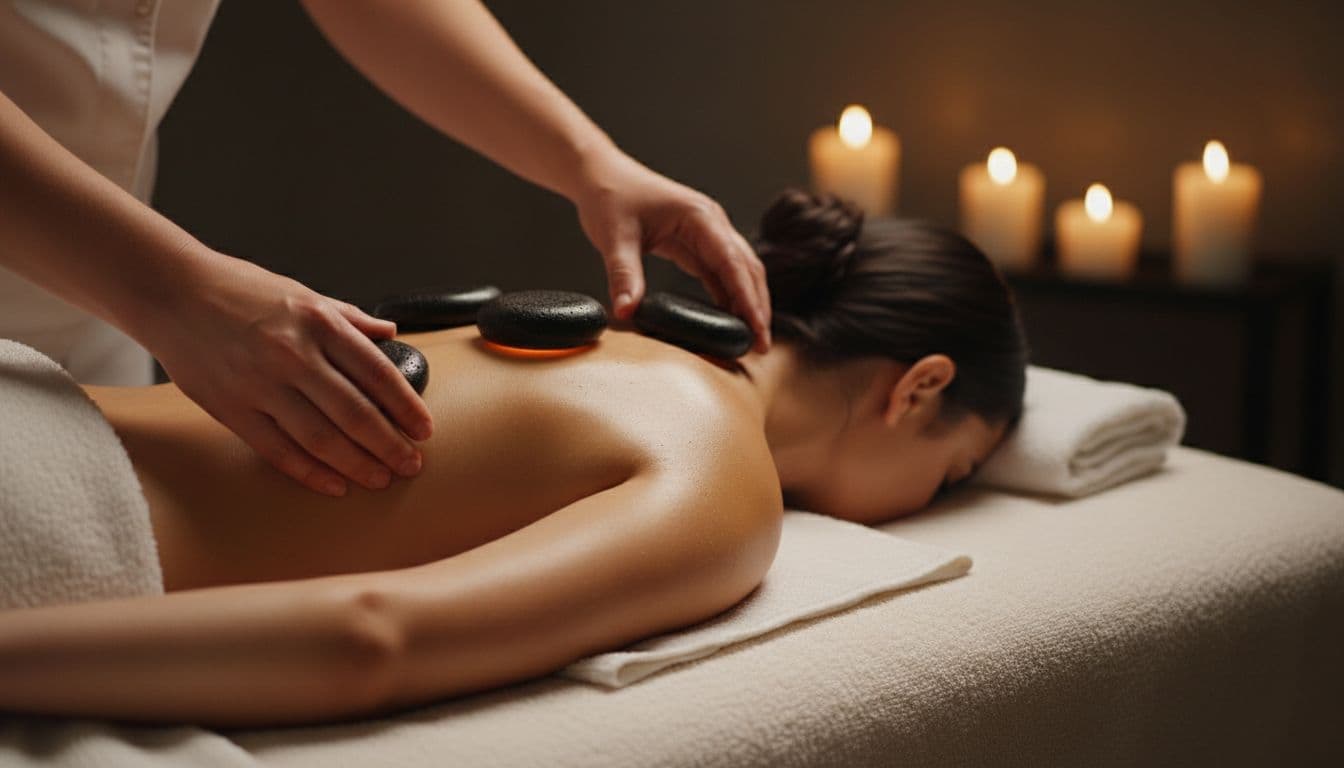
One important line in the sand: it should never feel like burning. A hot stone massage is “comfortably hot,” not “I’m trying to tolerate this.” If a stone feels too warm, speak up right away. You can always ask your therapist to:
- Remove the stones from a spot
- Lower the temperature
- Add an extra towel barrier
- Switch to hands-only for a while
If you find yourself holding your breath because of heat, it’s too hot. Comfort is the point, and a good therapist adjusts quickly.
The stones, the temperature, and why basalt is common
Most spas use basalt stones, which are smooth stones made from volcanic rock. Basalt is popular for one practical reason: it holds heat well. That means the stone stays evenly warm instead of cooling off immediately or developing hot spots. Just as important, basalt stones are usually polished, so they glide smoothly and feel soothing against the skin.
In a professional setting, therapists heat stones in a temperature-controlled water bath heater, not a microwave, oven, or kettle. The goal is steady, predictable warmth. While practices vary by spa and client comfort, a commonly cited safe working range is about 120 to 150°F (49 to 65°C). Many therapists stay toward the lower end for sensitive skin, first-time clients, or longer stone placements.
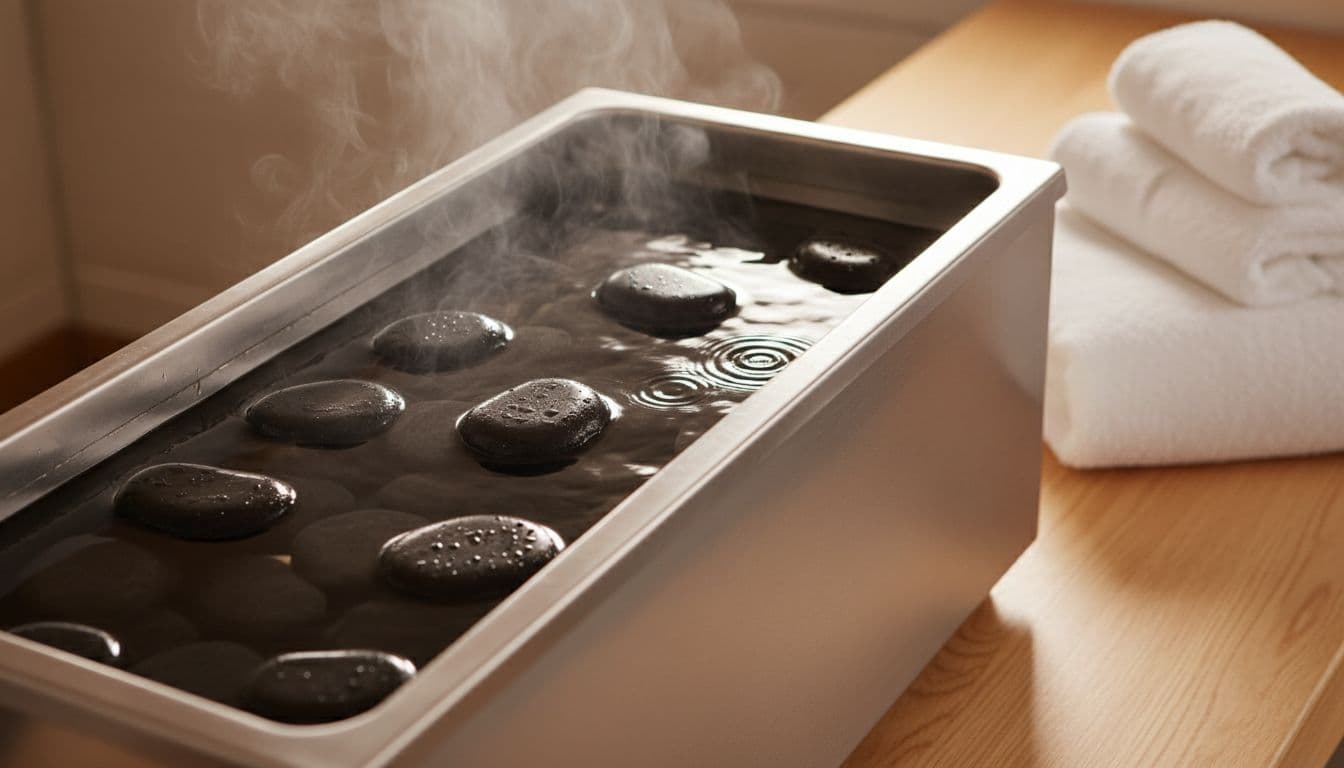
You should also see basic safety habits that protect your skin and keep the experience relaxing. For example, a careful therapist will:
- Test the stones before they touch you, often on their inner forearm or hand
- Use a barrier (like a towel or sheet) when stones rest in place, especially on the back or abdomen
- Keep stones moving when gliding them, so heat doesn’t build in one spot
- Check in often, since your comfort can change as your body warms up
Heat also changes how your body feels the massage strokes. Warmth can encourage blood vessels near the surface to open up, which may support better circulation in the area. Meanwhile, muscles often become more pliable, so your therapist can work with the grain of the tissue instead of forcing it. In plain terms, heat helps your body “let go,” then massage helps it stay that way.
A quick look at where it came from, and how it became today’s spa favorite
Using heat for comfort isn’t new. People have been warming the body with stones, sand, and other natural materials for centuries, usually to ease soreness after work or travel. What changed in modern spas is consistency: today’s hot stone massage is designed around repeatable comfort and clear safety steps.
A simple timeline helps put it in context:
- Ancient India (Ayurveda): Warming techniques, including heated objects, appeared in traditional care as part of broader routines for rest and balance. Some traditions describe “energy” concepts, but your experience can be purely physical: warmth plus touch equals relaxation.
- Ancient China (Bian stones): Early stone tools and stone-based methods show up in historical wellness traditions. Over time, the idea of using stones for body care stayed part of the cultural toolbox.
- Hawaiian and Native American heat traditions: Many communities used warmed stones and local heat practices in restorative rituals, often tied to the land and to recovery after physical effort.
- 1990s United States (LaStone Therapy): Modern hot stone massage took a big step into mainstream spa culture with LaStone Therapy, which helped standardize how therapists heat, place, and move stones during a session.
That standardization matters. Today, a good hot stone massage isn’t a mystery treatment. It’s a well-structured blend of temperature control, skilled touch, and ongoing communication, so you get the comfort of heat without the risk of “too much, too soon.”
What happens during a Hot Stone Massage, step by step
A Hot Stone Massage usually follows a calm, repeatable flow, so your body can relax before any deeper work starts. Think of it like warming butter before you spread it, heat softens what feels stiff, so pressure can stay comfortable.
Most sessions run 60 to 90 minutes. You’ll typically arrive, do a quick intake chat, get time to undress in private, then settle under a sheet with professional draping throughout. Your therapist uses oil or lotion for glide, and they introduce heat slowly so nothing feels like a shock.
Before you start, the questions a good therapist will ask
Before any stones touch your skin, a good therapist checks the basics that make heat therapy safe and enjoyable. This part should feel quick, clear, and personal, not like an interrogation.
Expect questions about:
- Injuries and pain spots: Recent sprains, back pain, neck issues, or anything that flares with pressure.
- Recent surgeries: Especially areas still healing, scar tissue, or any numb zones.
- Skin sensitivity: Eczema, rashes, sunburn, allergies to oils, or skin that marks easily.
- Headaches and migraines: Heat and pressure around the neck can help some people, and bother others.
- Circulation issues: Varicose veins, clot history, diabetes-related nerve changes, or anything that affects sensation.
- Medications that change heat sensitivity: Some meds can make you feel heat less, or react more strongly to it.
- Comfort with pressure: Light, medium, firm, or a mix, plus what “too much” feels like for you.
This is also your moment to share preferences that shape the whole experience. For example, you can say:
- You want quiet or you’re fine with light conversation.
- You prefer music (or none).
- You want extra time on shoulders, lower back, hips, or feet.
- You’d like no belly stones, or you’re open to them.
If you’re unsure whether heat therapy is safe with a medical condition, check with a clinician first. It’s a simple step that can prevent a bad surprise.
Once you’re on the same page, your therapist will step out so you can undress to your comfort level. Most people keep underwear on. Then you’ll lie on the table under a sheet, with only the area being worked on uncovered.
On the table, how stones are placed and why those spots matter
After you settle in, your therapist usually starts by confirming comfort: table warmth, face cradle height, and how the room feels. Then they may begin with a few minutes of hands-only massage. This helps your body adjust before any concentrated heat.
When it’s time, the therapist places smooth, heated stones on specific areas, often with a towel barrier between the stones and your skin. These are sometimes called “placement stones.” They rest while the therapist massages other areas, so you get steady warmth without constant pressure.
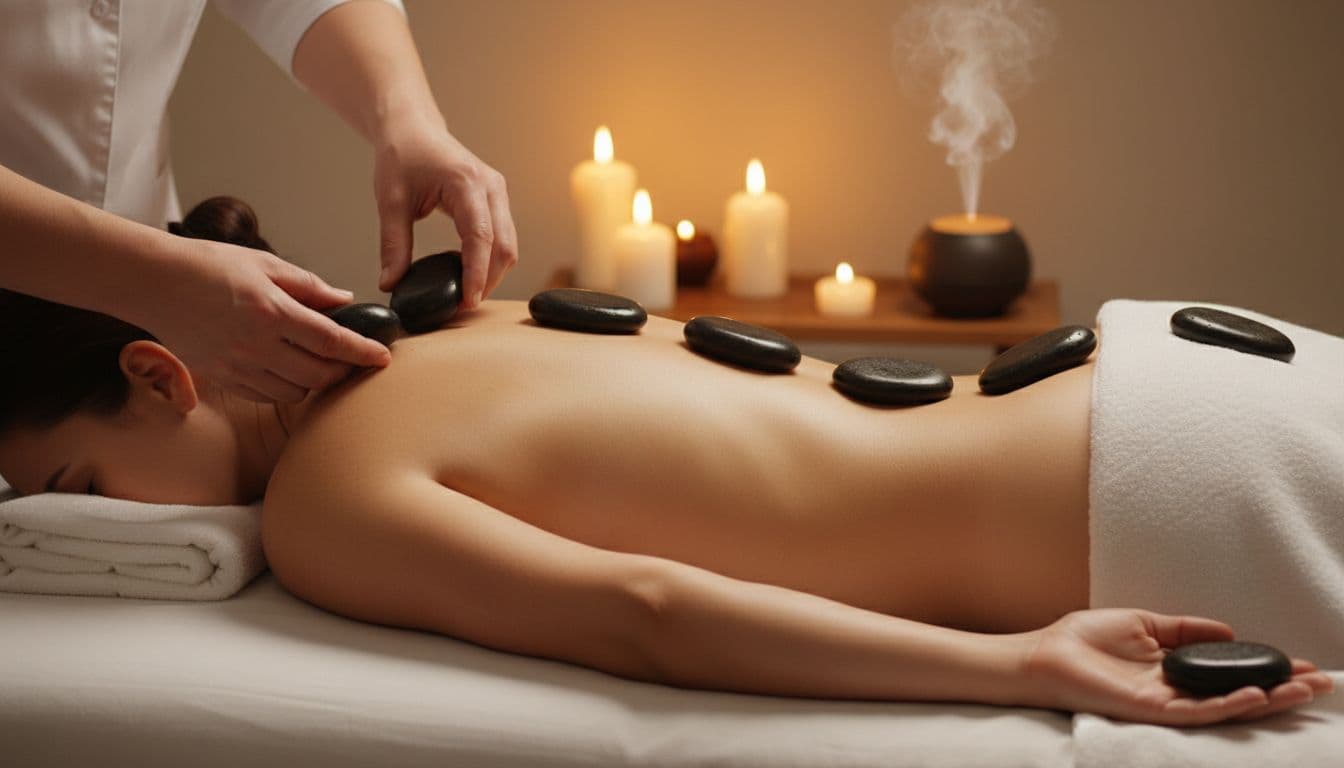
Common placement points and why they’re used:
- Along the back (next to the spine, not on bone): Warms big muscle groups that hold stress, especially in the mid-back and low back.
- Across the shoulders and upper traps: Helps drop that “shoulders up to your ears” feeling.
- On the thighs or calves: Softens heavy leg tension, great if you sit a lot or walk a lot.
- In the palms: Unclenches the hands, which can calm your whole nervous system.
- Between the toes or on the tops of feet: Relaxes small, overworked foot muscles, and can feel surprisingly soothing.
- Sometimes the belly: If you’re comfortable with it, gentle warmth can feel grounding, like a warm compress.
Stones often rest in one place for about 5 to 10 minutes at a time. After that, they may get swapped out for freshly warmed stones, or moved to a new area. If the heat feels perfect at first but starts feeling “too much” later, say so, your skin warms up as the session goes on.
Some Hot Stone Massage sessions also include brief cold stones for contrast therapy, usually on a specific spot that feels inflamed or overworked. A careful therapist will only do this if you agree, and they’ll keep it short. The goal is a quick “reset” feeling, not a jolt.
The massage itself, how heated stones are used like an extension of the hands
Once your muscles feel warmed, your therapist uses heated stones the way they’d use palms, thumbs, or forearms, but with heat doing part of the work. This is where many people notice that the session feels deep without feeling forceful.
First, your therapist applies oil or lotion, so stones glide rather than drag. Then they use slow, steady strokes, often long passes down the back, across the shoulders, or along the legs. The pacing matters. Fast strokes can feel stimulating, while slow strokes tell your body it’s safe to soften.
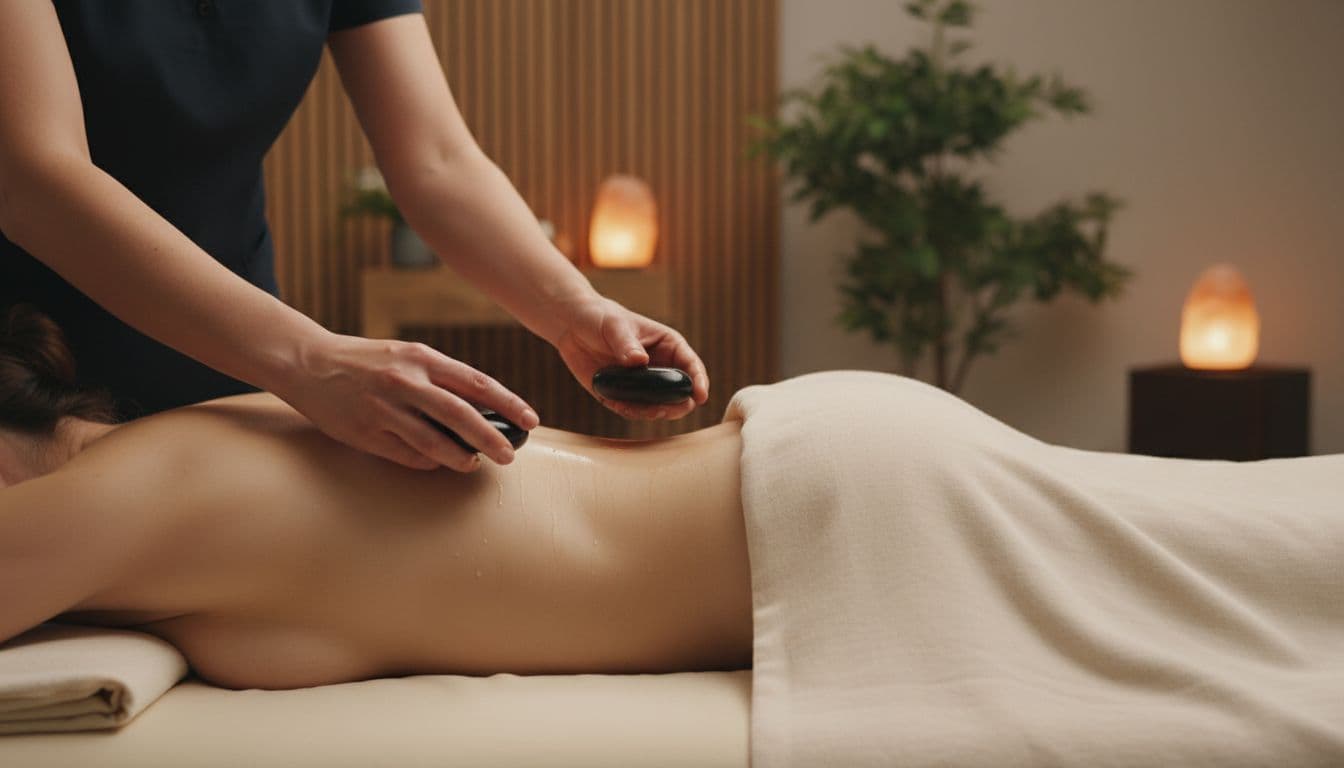
Here’s what “stones as hands” often looks like during a typical session:
- Warm-up strokes: Light to medium pressure to spread oil and introduce heat gradually.
- Gliding and sweeping: Stones slide along large muscles (back, hamstrings, calves) to ease general tightness.
- Kneading and circling: The therapist uses small circles with the stone to work stubborn areas without poking.
- Targeted holding (briefly): A stone may pause on a tight spot for several seconds, then move on, so heat can soak in without overheating one area.
- Hands plus stones: Many therapists switch back and forth, using hands for detail work and stones for broad, soothing pressure.
Heat often allows deeper work with less force because it reduces that “guarding” response. Your body doesn’t have to fight the pressure, so your therapist can get results without pushing hard.
It’s also worth saying clearly: “Good pain” isn’t the goal in a Hot Stone Massage. Comfort is. You should feel a satisfying release, not the urge to tense up or grit your teeth.
Tell your therapist right away if you feel any of these:
- Sharp pain (not just tender pressure)
- Burning or stinging heat
- Numbness or tingling
- Dizziness or nausea
Simple phrases work best in the moment, like “That’s too hot,” “Please use lighter pressure,” or “That spot feels sharp.” A professional will adjust fast, add more towel barrier, swap stones, or switch to hands-only.
After the session, what to do in the next 24 hours to feel your best
When the massage ends, your therapist will remove any remaining stones and usually finish with a few calming strokes. After that, they’ll step out so you can get dressed slowly. Standing up too fast can make you feel lightheaded, especially after heat, so take your time.
Over the next day, a little care helps the benefits last longer:
- Drink water: Hydration supports recovery, especially after heat and muscle work.
- Do light stretching: Gentle neck rolls, hip openers, or calf stretches keep you from tightening back up.
- Go easy on hard workouts: If you feel loose, sleepy, or “melted,” skip heavy lifting or intense cardio right away.
- Plan for rest: A calm evening and an early night can make the massage feel even better.
Some effects are normal, especially if you had tight areas worked on:
- Mild soreness or tenderness
- Feeling extra relaxed or sleepy
- Needing to urinate more than usual (common after massage and hydration)
Watch for red flags that are not normal, and contact the spa or a clinician if they show up:
- Blistering
- Unusual swelling
- Lingering burning sensation
- New numbness that doesn’t fade
A warm shower later can feel amazing because it keeps muscles soft. Still, avoid very hot baths if you already feel overheated, flushed, or headachy. Heat should leave you calm, not cooked.
Benefits, best fit, and when Hot Stone Massage is not a good idea
Hot Stone Massage tends to feel like a long exhale for your whole body. The warmth softens tight areas first, then the massage helps them let go. If your stress shows up as shoulder knots, jaw tension, or a busy mind at night, this style often feels easier to sink into than a pressure-heavy session.
At the same time, heat changes how your body responds, so it is not for everyone. The goal here is comfort with clear boundaries: enjoy the benefits, know who it fits best, and recognize the situations where hot stones are a bad match.
What Hot Stone Massage can help with, in plain language
If your muscles feel like they are stuck on “high alert,” heat can help turn the volume down. Most people notice the shift early, because warmth relaxes tissue quickly and makes regular massage strokes feel smoother. It is like warming up stiff clay before you shape it, things move with less force.
Here are the outcomes people usually care about most:
- Looser shoulders and upper back: The heat can calm that “hunched” feeling from desk work, driving, or stress, so your shoulders drop without you trying.
- Less stiffness and easier movement: Many people feel more flexible right after, especially through the back, hips, and legs. That can make stretching later feel simpler.
- Stress relief that feels physical: Warmth plus slow strokes often settles the nervous system. As a result, your breathing deepens and your body stops bracing.
- Better sleep that night: A relaxed body often leads to an easier time falling asleep. Some people also wake up less during the night.
- Feeling warmer and calmer overall: If you tend to run cold, the stones can feel grounding, like a warm blanket that sinks in.
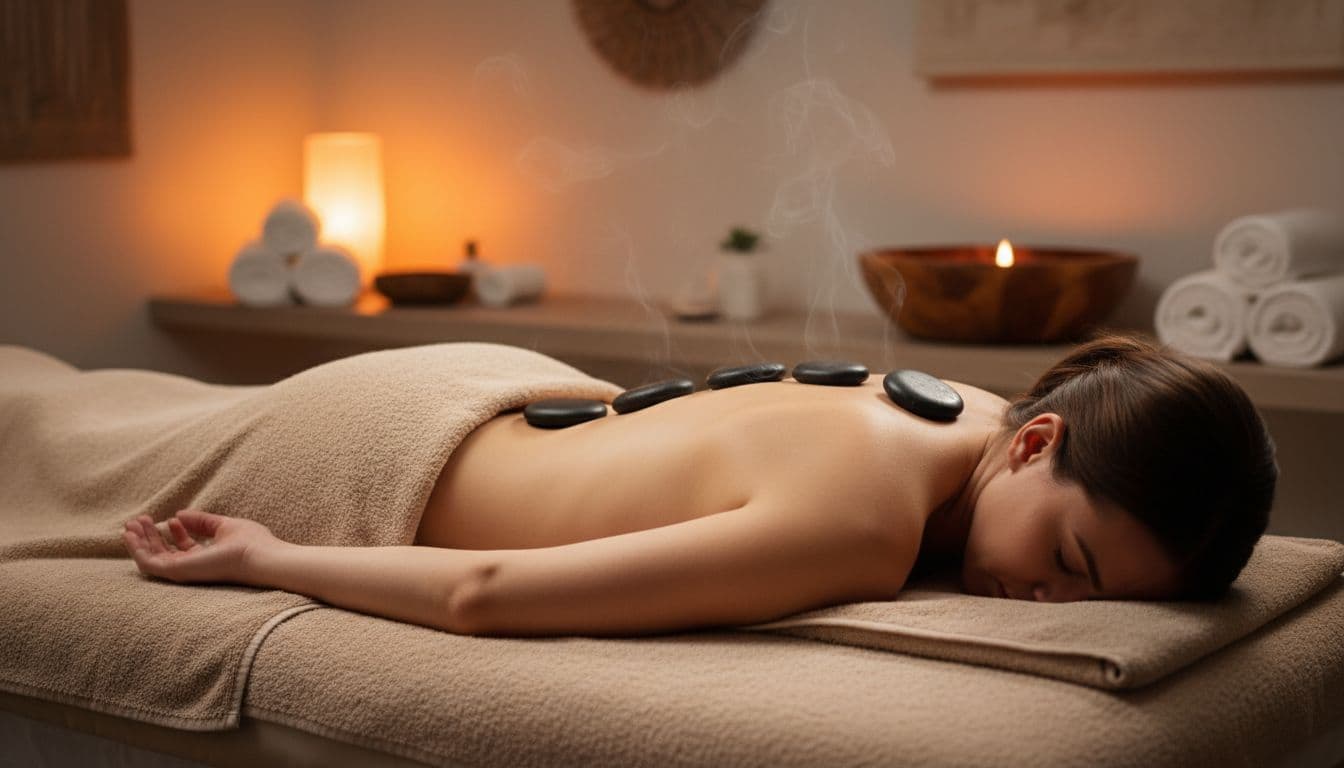
A simple way to think about the “why” is heat plus massage. Heat can open up surface blood vessels and increase circulation in the area. Meanwhile, massage can help reduce muscle guarding and ease tenderness for some people. Studies suggest heat and massage can increase blood flow and reduce pain in certain cases, but long-term research is still growing, so it is best seen as supportive care, not a cure.
A good Hot Stone Massage should feel like relief, not a challenge. If you are “tolerating” the heat, the stones are too hot.
You can also expect benefits to be most noticeable when your session matches your life. For example, if you sit all day and barely move your upper back, the relief may feel dramatic. On the other hand, if you are already stretching, sleeping well, and managing stress, the shift might feel more subtle but still deeply relaxing.
Who it is best for, and who may prefer a different massage style
Hot Stone Massage is a great match when you want relaxation and muscle ease, without intense pressure. Some people love it because it feels deep, yet gentle at the same time. Others find it too warm or not targeted enough.
It tends to be best for:
- People who like warmth, such as hot showers, heating pads, or warm baths.
- Anyone with muscle tightness from desk stress, long commutes, or standing all day.
- Those who feel anxious, wired, or overstimulated, and want a calming session.
- Clients who want results but do not enjoy heavy deep-tissue pressure.
- Anyone who often feels cold, especially in the feet and lower legs.
However, you might prefer a different style if your goals are more specific. For example, some clients want very focused work on a problem area, like a stubborn spot under the shoulder blade. Others want strong pressure and detailed work with elbows and forearms.
Hot stones might not be ideal if you:
- Prefer very firm deep tissue and want strong, targeted pressure the whole time.
- Feel claustrophobic or uncomfortable with heat, especially when stones rest in one spot.
- Overheat easily, get flushed fast, or dislike warm rooms.
- Want a treatment built around a sport or event, where a therapist follows a performance plan.
If hot stones are not the perfect fit, these alternatives can match your preference better:
- Swedish massage: Best if you want gentle, relaxing strokes without heat.
- Deep tissue massage: Better for slow, targeted pressure on specific tight areas.
- Prenatal massage: The safer option for pregnancy, with proper positioning and pressure.
- Sports massage: Best when your goal is recovery, range of motion, or event prep.
The easiest way to choose is to describe what you want in one sentence, then let the therapist match the style. Try something like: “My shoulders and lower back feel tight, and I want to relax without heavy pressure.” That is a strong signal that Hot Stone Massage may be a good fit.
Safety first, the conditions that can make hot stones risky
Hot Stone Massage is safe for many people when a trained therapist follows proper heat control. Still, heat is powerful. It can cause burns if stones are too hot, and it can also change circulation. In addition, some health conditions reduce sensation, which means you might not feel heat building up until your skin is already irritated.
Here is why heat can be an issue in simple terms:
- Burn risk: If a stone is too hot, or stays in one spot too long, your skin can burn.
- Circulation changes: Heat can widen blood vessels. That may be uncomfortable or risky for some heart and blood pressure conditions.
- Reduced sensation: If you cannot feel temperature well (common with some forms of diabetes or nerve problems), you cannot give accurate feedback.
A professional therapist protects you by doing the basics, every time. They use a temperature-controlled stone heater, test stones often, keep stones moving when gliding, and add a towel barrier when stones rest on the body. Just as important, stones should never be microwaved in professional care, because microwaves can create uneven hot spots that burn.
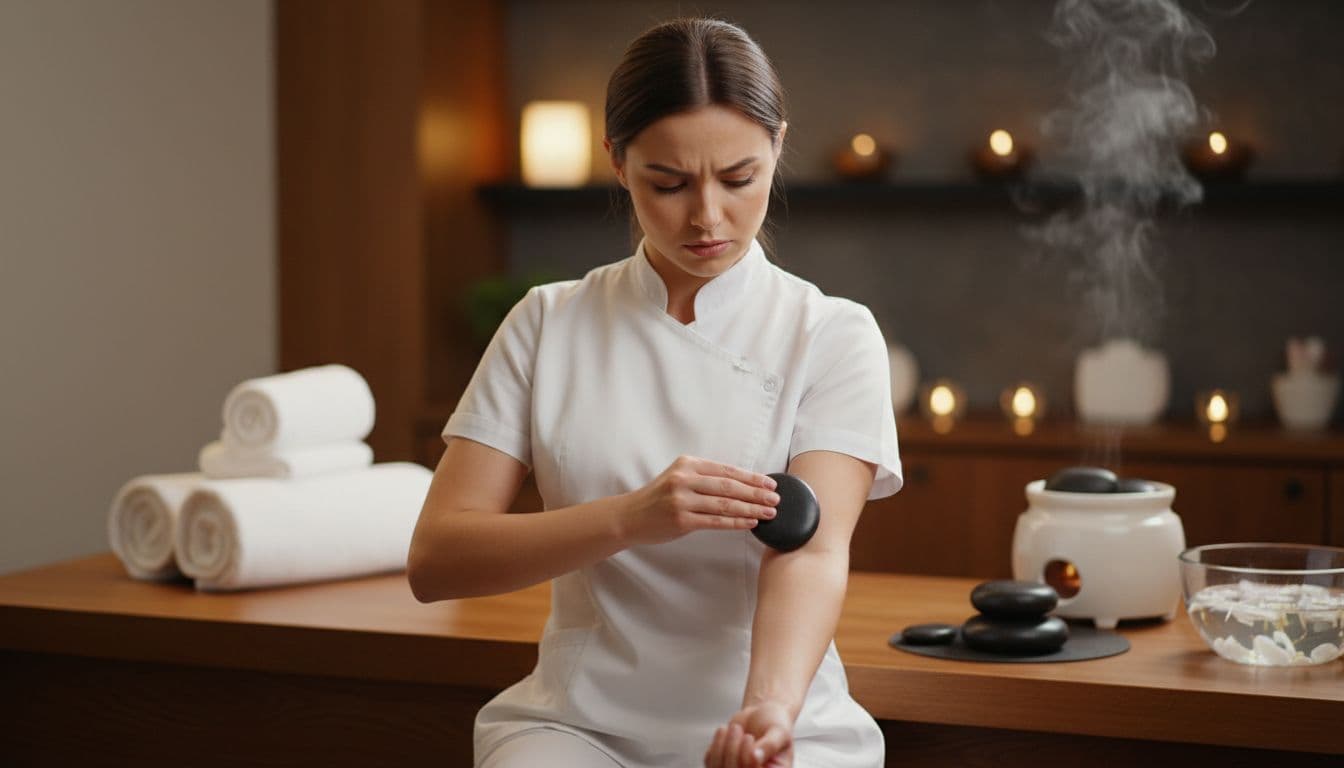
If any of the points below match you, pause and get medical clearance first. A quick call can save you pain later.
When to ask your doctor first (or avoid hot stones):
- Sunburn, rash, open cuts, or skin infection in the area to be treated.
- Diabetes with reduced sensation (numbness, tingling, or neuropathy in feet, legs, or hands).
- Heart disease or a history of chest pain, heart failure, or serious rhythm issues.
- High blood pressure that is not well controlled, or you feel dizzy easily.
- Pregnancy, unless your provider approves and you book a prenatal-trained therapist (many spas avoid hot stones in pregnancy).
- Heat sensitivity or conditions that make heat hard to tolerate.
- Circulation problems, including a history of blood clots, severe varicose veins, or diagnosed vascular disease.
- Recent surgery, new scars, or areas with numbness after an injury.
- Fever or active illness, because added heat can leave you feeling worse.
Even if you are generally healthy, speak up fast if something feels off. Burning, stinging, nausea, dizziness, or a racing heartbeat are not “normal massage sensations.” A skilled therapist will remove the stones, cool the area, adjust the plan, or switch to hands-only.
The safest mindset is simple: you should always feel comfortably warm, never “too hot.” That is the line that keeps Hot Stone Massage both soothing and smart.
How to choose a great Hot Stone Massage therapist and get more value from every session
A Hot Stone Massage can feel amazing, but the therapist makes the difference. The right person keeps heat safe, checks in often, and adjusts without making it awkward. In other words, you get that deep, melting relief without worry.
This section helps you book with confidence, show up prepared, and choose a schedule that matches your goals. You’ll also see a few practical 2026 trends to watch for, like contrast hot and cold work for recovery, eco-minded stone practices, and safer temperature control.
What to ask when booking, training, heat controls, and hygiene
A good Hot Stone Massage therapist welcomes questions. If the front desk seems rushed or vague, treat that as a clue. You’re trusting someone with heat on your skin, so clear answers matter.
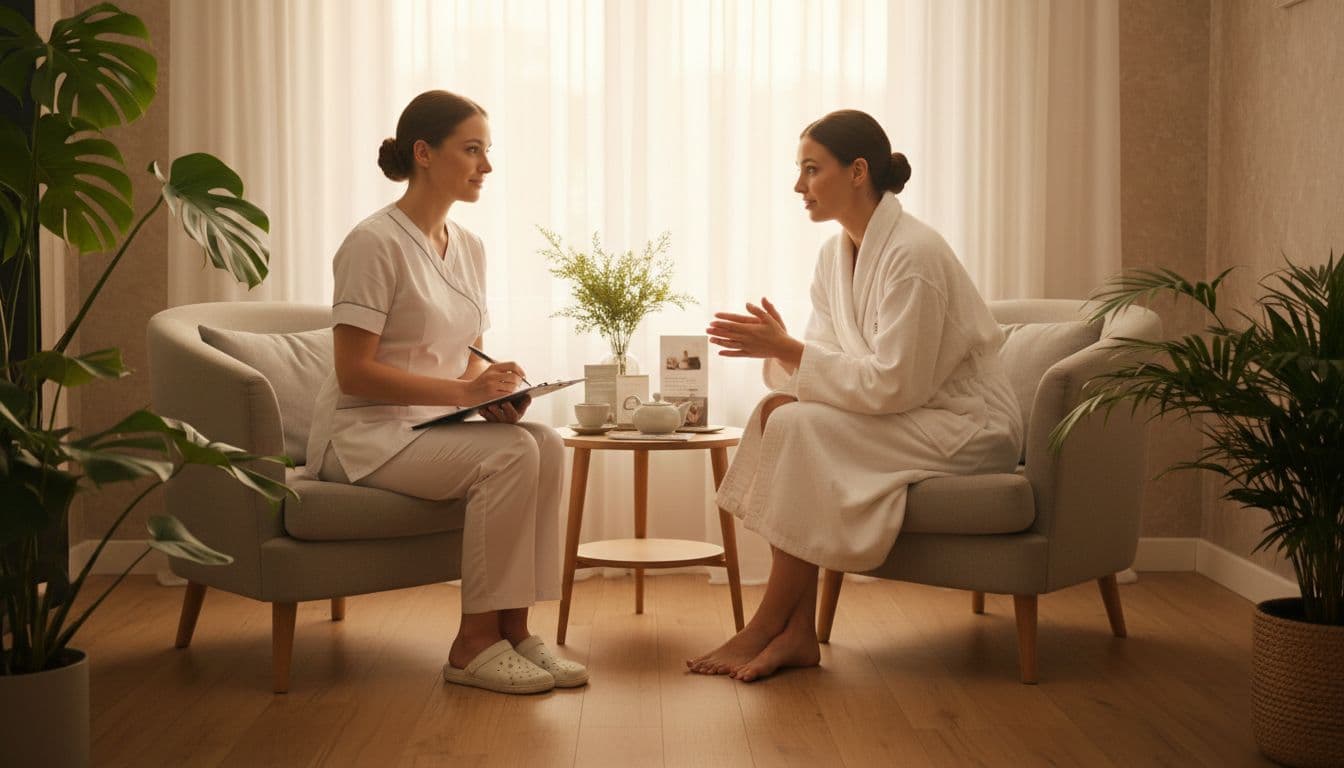
Here’s a simple booking script you can use. Keep it friendly and direct:
- “Are you trained in hot stone techniques?”
You want someone who learned hot stone safety, not someone experimenting. - “How do you heat the stones?”
Listen for a temperature-controlled stone heater (usually a water bath). Avoid places that mention microwaves or “we just heat them quickly,” because that can create hot spots. - “How do you sanitize the stones between clients?”
You want a clear process (washing, disinfecting, and clean storage). The answer shouldn’t sound like guessing. - “What temperature range do you use?”
Many spas work around 120 to 150°F (49 to 65°C), but comfort comes first. A pro can explain how they keep it safe. - “Can you adjust the heat during the session?”
The best answer is an easy “yes,” plus how they do it (more towel barrier, swapping stones, lowering heater temp, or switching to hands-only). - “Do you use barriers for sensitive areas?”
A towel or sheet barrier is common when stones rest in place, especially on the back or abdomen. - “How do you handle contraindications?”
A solid therapist asks about things like diabetes with numbness, pregnancy, circulation problems, sunburn, new injuries, or blood clot history, then they adapt the plan or suggest a different service.
Also ask about draping and consent. You can say, “I want professional draping at all times, and please ask before working on my glutes or abdomen.” A good therapist will agree right away and check in during the session.
If a therapist acts annoyed by safety questions, choose someone else. You’re not “being difficult,” you’re being smart.
2026 trend to notice: more spas now use digital temperature controls and better stone heaters that hold steady heat. That means fewer surprise “too hot” moments, especially in longer sessions. Some therapists also offer contrast work (brief cold stones after heat) for recovery, but they should always ask first and keep it gentle.
Simple prep tips that make the massage feel better
Hot stone sessions reward a little prep. Think of it like warming up before a workout, small steps help your body relax faster.
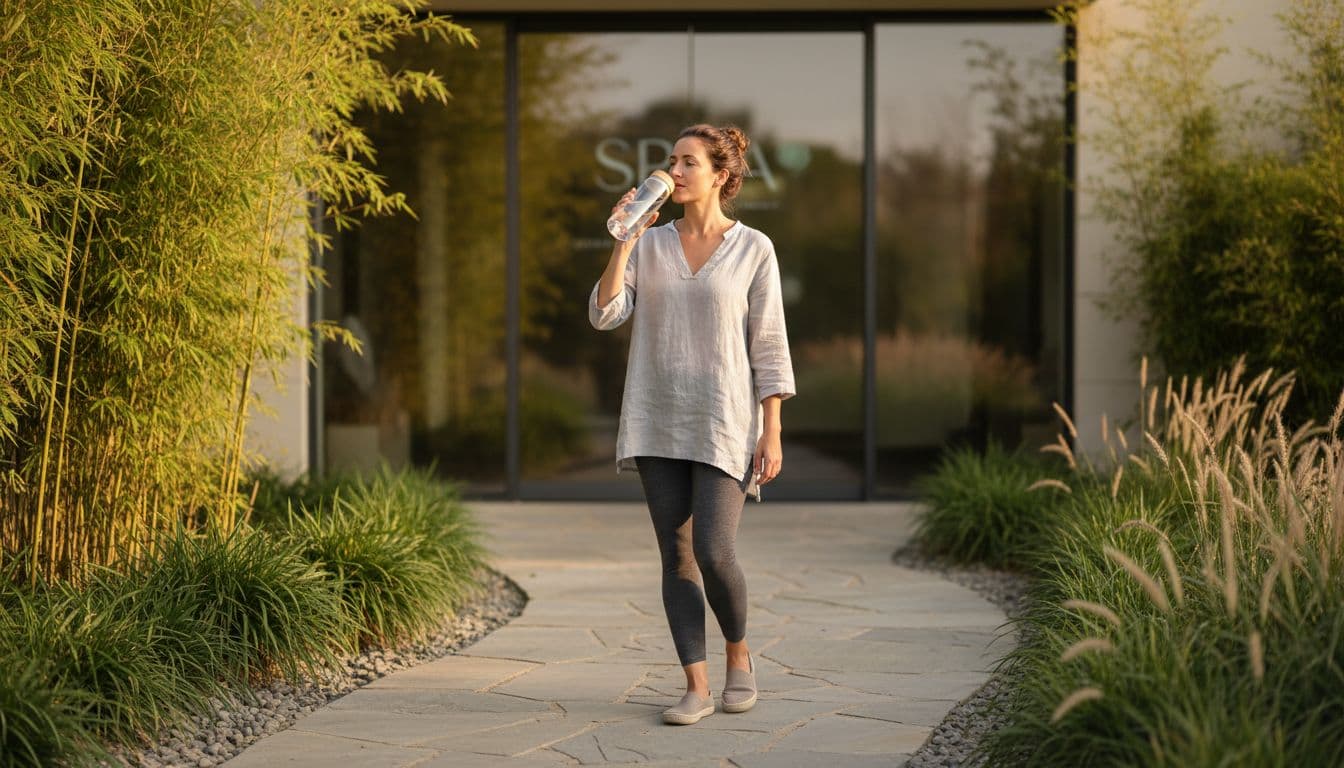
Start with timing and comfort:
- Arrive 10 to 15 minutes early so you’re not rushing in tense.
- Eat light beforehand. A heavy meal plus heat can feel uncomfortable.
- Hydrate during the day, then sip water after. You don’t need to chug.
- Skip alcohol right before your appointment. Alcohol plus heat can make you dizzy.
- Shower if possible, especially if you came from work or the gym. You’ll feel fresher on the table.
A few small choices also prevent annoying distractions:
- Remove jewelry, especially necklaces, watches, and large earrings. Metal can get in the way, and lotion makes it slippery.
- Wear easy clothes so changing feels simple and calm.
- Use the restroom right before you start. Heat can make you need to go mid-session.
Next, speak up early about boundaries. This isn’t being picky, it’s how you get the best result.
- If you’re ticklish, say where (feet, ribs, inner arms). Your therapist can change the stroke.
- If you don’t want certain areas touched, name them up front. Simple is fine: “Please avoid my abdomen and inner thighs.”
- If you have skin issues, mention them. For example, sunburn, a rash, acne flare-ups, or recent waxing can make heat and friction feel rough. A pro can avoid the area, use extra draping, or switch to hands-only.
During the massage, your breath is your best tool. Slow inhales and long exhales help your muscles stop guarding. If you catch yourself tensing, try this: breathe out as the therapist works the tight spot, like you’re letting air out of a balloon.
2026 trend to try (if you like it): some therapists add a short guided breathing moment or a quiet check-in after the first few stones. It sounds small, but it often makes the whole Hot Stone Massage feel smoother.
How often to get Hot Stone Massage, and how to set goals
Frequency depends on what you want from your sessions. If you treat Hot Stone Massage like a random luxury, you’ll still feel good. However, you’ll get more value when you match the schedule to your goal.
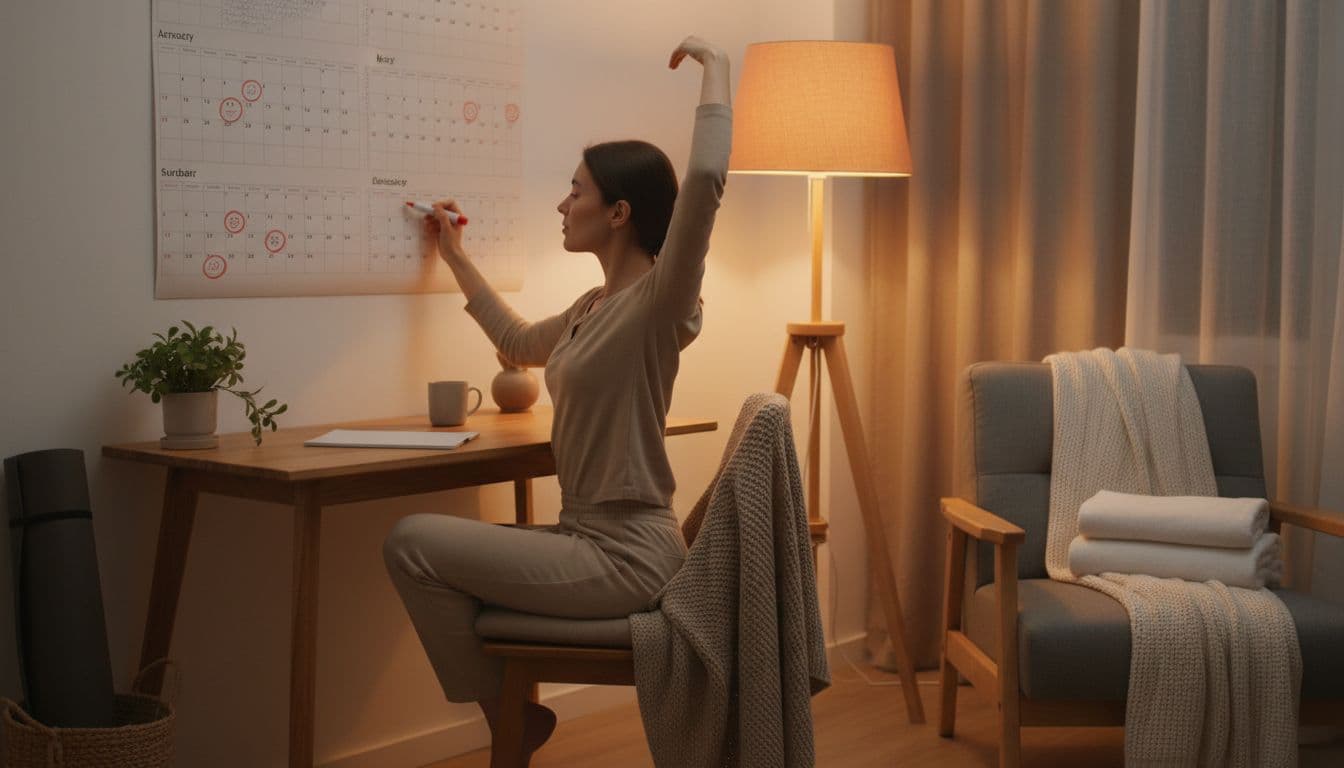
Here are practical ranges that work for most people:
- Occasional treat (every 2 to 4 months): Best if you’re generally okay and want a reset.
- Monthly maintenance: A strong choice for regular stress, desk tension, or tight hips and shoulders that keep coming back.
- Short series during high stress (weekly for 2 to 4 weeks): Helpful during a rough stretch, travel, intense work deadlines, or a big life change. After that, many people shift to monthly.
Your goal should drive the plan:
- If your main goal is sleep and stress relief, start monthly. If you feel a big drop in anxiety, keep it steady.
- If you’re dealing with chronic tightness, you may do better with a short series first. Muscles that have been tight for months often change more with consistency than with one long session.
To make it personal, track one simple thing: how you feel 24 hours later. Right after a massage you might feel dreamy and loose, then the real test comes the next day.
Use quick notes in your phone, like:
- “Slept through the night.”
- “Neck felt lighter at my desk.”
- “Lower back tightened again by evening.”
- “Heat was perfect, but calves felt too intense.”
Then adjust. If you feel great for three weeks and crash on week four, monthly makes sense. If relief lasts only a few days, you may need a shorter series, or a different style mixed in.
A couple at-home habits can extend the relaxed feeling:
- Warm shower later that day, so your muscles stay soft.
- Gentle stretching, especially neck, chest, hips, and calves. Keep it mild, no forcing.
2026 trend to ask about: some spas now offer contrast hot and cold stone work as an add-on for recovery. It’s usually brief and targeted, not a full cold session. If you’re curious, ask for a small test first, because not everyone enjoys cold.
Finally, don’t ignore values. More clients now ask about eco-friendly stone sourcing and responsible spa practices. A good business won’t get defensive, they’ll explain how they choose stones, clean them, and reuse them safely for years.
Conclusion
Hot Stone Massage blends steady warmth with skilled, slow massage strokes, so tight muscles soften early and your body stops bracing. During a typical session, smooth heated stones rest on key areas (like the back, shoulders, hands, or calves), then your therapist glides them with oil to create deep comfort without heavy force. As a result, many people leave feeling looser, calmer, and ready for better sleep that night.
Still, the best results come from safety and clear communication. Choose a trained therapist who uses temperature-controlled heating, tests stones often, and adds a towel barrier when needed. Then speak up right away if anything feels too hot, too sharp, or simply not relaxing. Also skip hot stones, or get clinician clearance first, if you have key concerns like reduced sensation from diabetes, circulation or heart issues, pregnancy, sunburn, skin infection, or a recent injury or surgery.
Before you book, decide what you want most (relaxation, less tension, or better sleep), share that goal at the start, and walk into your next Hot Stone Massage with confidence.